
Views: 220 Author: Youti Clothing Publish Time: 2026-08-27 Origin: Site


Content Menu
● What Makes Reflective Work Clothes Safer?
● Reflective Work Clothes vs Regular Workwear
● Why Regular Workwear Falls Short on Road Projects
● Choosing Class 2 or Class 3 Road Workwear
>> Class 2 Reflective Work Clothes
>> Class 3 Reflective Work Clothes
● A Practical Garment Selection Method
>> Step 1: Identify Vehicle Exposure
>> Step 2: Choose the Right Garment Format
>> Step 3: Verify the Label and Construction
>> Step 4: Build Wear Compliance Into the Design
● The Overlooked Risk: Dirty or Damaged Reflective Tape
● Expert Buying Guidance for OEM Workwear Brands
● FAQ
>> 1. Are reflective work clothes required for road construction workers?
>> 2. Can a regular safety vest replace a reflective work jacket?
>> 3. What is the difference between fluorescent and reflective material?
>> 4. Is yellow or orange reflective workwear better?
>> 5. How often should reflective work clothes be replaced?
>> 6. Can OEM buyers add a company logo to reflective work clothes?
>> 7. Can reflective workwear be customized for different climates?
For road construction crews, reflective work clothes are substantially safer than regular workwear whenever workers face moving traffic, construction vehicles, limited daylight, dust, rain, or visually complex surroundings. Regular workwear may protect against dirt, abrasion, or light weather exposure, but it does not reliably help drivers and equipment operators identify a person early enough to react.
For contractors, distributors, and workwear brands, the decision is not simply "safety vest or normal uniform." The right solution is a durable, compliant, job-specific high-visibility clothing system that crews will actually wear throughout the shift.
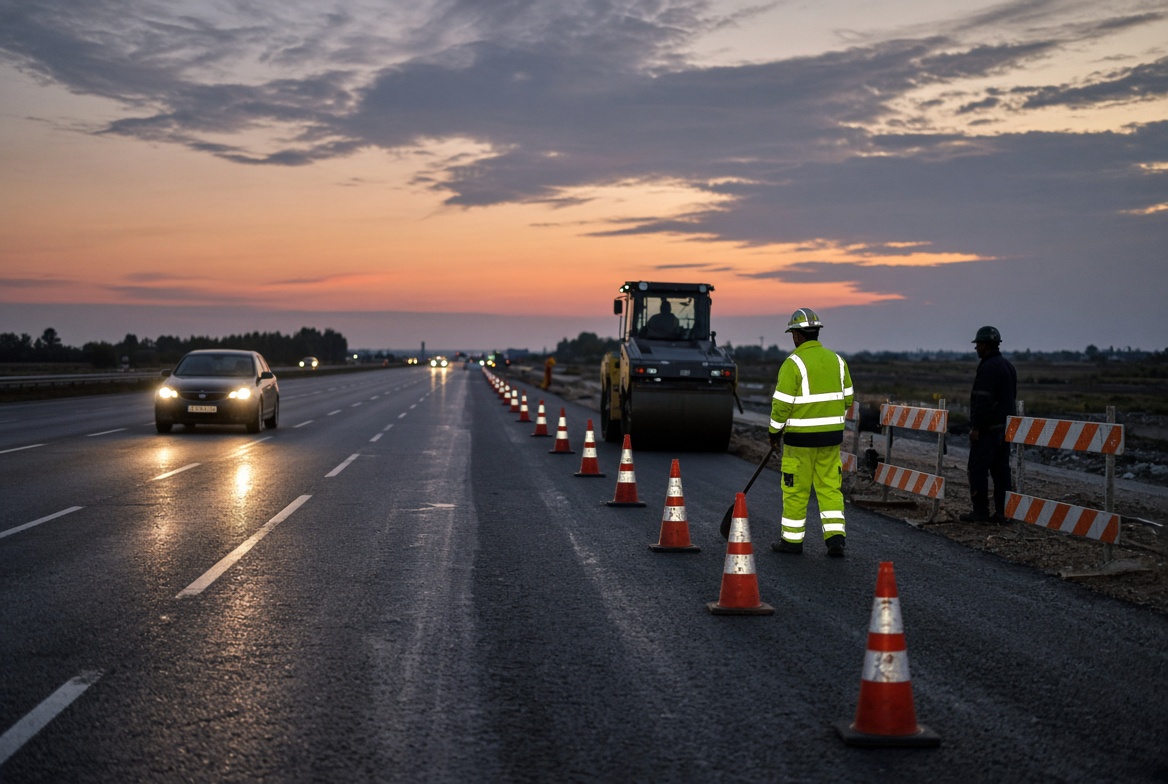
Reflective work clothes, often called high-visibility workwear or hi-vis clothing, are designed to make workers more conspicuous during daytime, low-light, and nighttime conditions.
They typically combine two visibility systems:
- Fluorescent background fabric for daytime, dawn, dusk, fog, and overcast conditions
- Retroreflective tape that reflects vehicle headlights back toward the driver at night
- Contrast materials that help distinguish the worker's body shape from road signs, barriers, equipment, and surrounding traffic
- High-coverage garment designs such as safety vests, jackets, coveralls, trousers, and bib overalls
By contrast, regular workwear focuses mainly on comfort, durability, appearance, and basic protection. A navy work jacket, gray coverall, black cargo pants, or branded polo shirt may look professional, but it can blend into asphalt, machinery, shadows, roadside vegetation, or temporary traffic-control equipment.
For crews working inside a temporary traffic-control zone, visibility is a primary protective layer. It does not replace traffic barriers, spotters, work-zone planning, or safe vehicle routes. However, it gives approaching drivers and equipment operators a better chance to see the worker sooner.
The U.S. Federal Highway Administration states that workers within the right-of-way of a Federal-aid highway who are exposed to traffic or construction equipment must wear high-visibility safety apparel. The current MUTCD guidance specifies Performance Class 2 or 3 apparel, or equivalent revisions, for daytime and nighttime activity.
| Factor | Reflective Work Clothes | Regular Workwear |
|---|---|---|
| Primary purpose | Improve worker conspicuity around vehicles and machinery | Provide comfort, durability, uniformity, and basic job protection |
| Daytime visibility | Fluorescent colors create strong contrast in daylight | Depends on garment color; often blends into the work environment |
| Night visibility | Retroreflective tape responds to headlights | Usually offers little or no headlight-return performance |
| Roadwork suitability | Designed for roadside, highway, utility, and traffic-control environments | Better suited to low-traffic indoor or controlled work areas |
| Standards alignment | Can be manufactured to ANSI/ISEA 107 Class 2 or Class 3 requirements | Usually does not meet high-visibility performance requirements |
| Worker identification | Helps drivers recognize a human form and movement | May not be recognized quickly at distance |
| Branding options | Can include logos, role identification, contrast panels, and custom colors within compliant design limits | Broad branding and color flexibility, but without high-visibility protection |
| Best use | Road construction, paving, utility work, flagging, nighttime maintenance, airport ramps | Workshops, warehouses, factories, offices, or low-risk indoor tasks |
The most important distinction is simple: regular workwear may make a crew look unified, while reflective work clothes help make the crew seen.
Road construction creates a difficult visual environment. Workers operate near lane closures, paving equipment, dump trucks, excavators, rollers, pickups, mobile cranes, and public traffic. A driver may be distracted, fatigued, navigating poor weather, or trying to understand changing lane patterns.
A worker wearing dark or neutral-colored work clothes can become difficult to distinguish from:
- Fresh asphalt and road surfaces
- Concrete barriers and metal guardrails
- Orange cones, signs, and work-zone devices
- Dust, exhaust, rain, and low sun glare
- Construction equipment and truck shadows
- Other workers standing nearby
Regular workwear can be appropriate as a base layer or underlayer. For example, a durable cotton-polyester work shirt, stretch work trousers, or insulated jacket may offer comfort and abrasion resistance. But once employees move near vehicle paths, road traffic, or mobile machinery, that standard uniform should be supplemented or replaced by compliant reflective work clothes.
In practice, a road crew often needs more than one garment. A lightweight reflective vest may suit hot, dry daytime tasks. A reflective softshell jacket may be more suitable for wet weather. A Class 3 reflective rain suit or coverall may be necessary when visibility is poor and the worker needs maximum body coverage.
For roadway work, the garment class should match the actual exposure, not simply the lowest purchase price.
The MUTCD requires high-visibility apparel meeting Performance Class 2 or 3 requirements for workers in relevant temporary traffic-control zones. It also says the employer's designated safety representative should select the appropriate garment class.
Class 2 garments provide a moderate level of visibility. They are commonly selected for daytime road construction, utility work, delivery-related roadside tasks, and controlled work zones where workers remain near traffic.
Typical Class 2 products include:
- Reflective safety vests
- Short-sleeve hi-vis T-shirts
- Long-sleeve reflective shirts
- Lightweight mesh safety vests
- High-visibility waistcoats for warm climates
Class 2 can be a practical choice when workers need mobility and ventilation. It is especially useful for asphalt crews, survey teams, road maintenance personnel, and utility workers performing daytime assignments.
However, Class 2 is not automatically enough for every road project.
Class 3 garments provide greater visible background material and retroreflective coverage. They are generally the stronger choice when workers face higher speeds, longer viewing distances, nighttime assignments, heavy rain, complex worksites, or a high risk of being struck by vehicles.
Typical Class 3 products include:
- Reflective jackets with sleeves
- High-visibility winter jackets
- Reflective coveralls
- Long-sleeve hi-vis shirts with compliant reflective tape
- Class 2 upper garments combined with Class E reflective trousers or bib pants
A Class 3 design is particularly valuable because sleeves and lower-body visibility can help drivers recognize human movement. A worker raising an arm, walking beside a lane closure, or directing equipment becomes more visually distinct than someone wearing a small torso-only vest.
Transportation incidents remained the most frequent type of fatal occupational event in the United States in 2024, representing 38.2% of all occupational fatalities. Pedestrian incidents involving motorized land vehicles increased 19.0% from 2023 to 2024, reaching 369 fatalities.
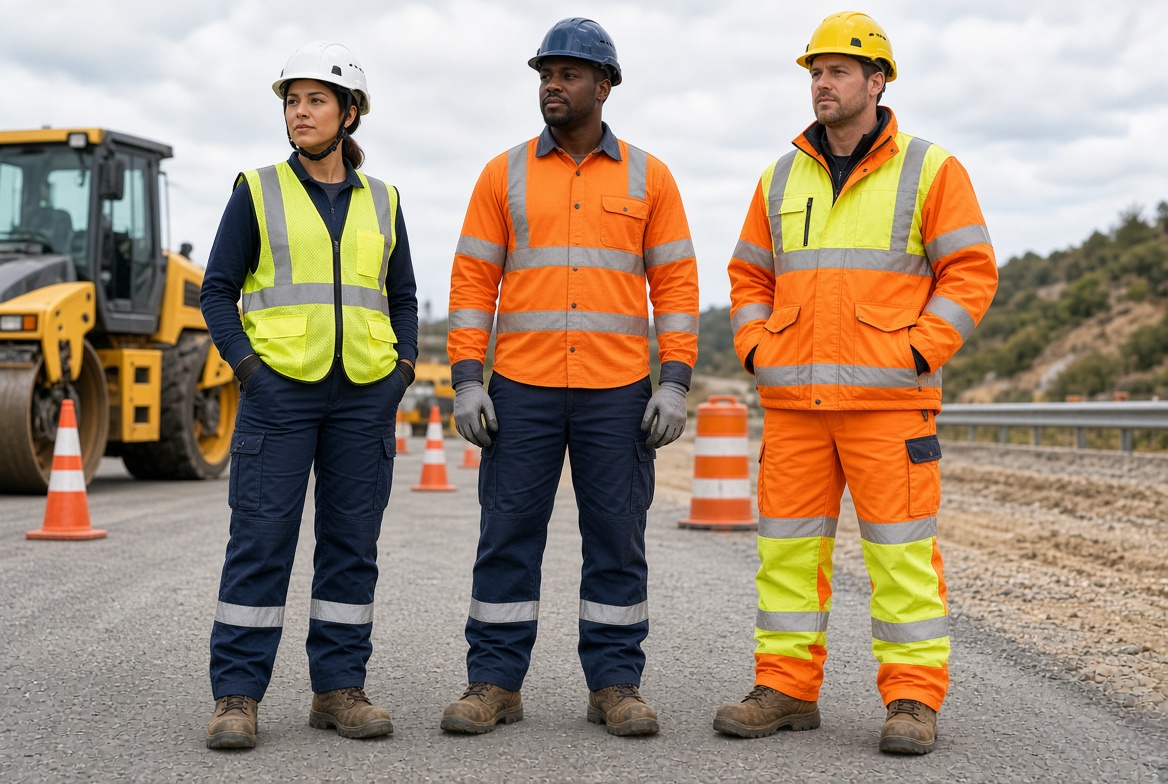
Safety managers should avoid selecting reflective work clothes based only on color, price, or a supplier's product photo. Use a structured assessment before placing a uniform order.
Ask where workers will stand, walk, and perform tasks.
Consider:
- Public-road traffic speed and volume
- Construction trucks entering or leaving the site
- Reversing vehicles and blind spots
- Night work or early-morning shifts
- Lane closures and shoulder work
- Distance between workers and moving equipment
- Weather, dust, smoke, fog, or rain
A worker stationed inside a protected, low-speed area may need a different garment from a flagger positioned close to active traffic.
The garment must suit the job, climate, and movement requirements.
| Work Situation | Recommended Workwear Direction |
|---|---|
| Hot-weather paving or daytime maintenance | Breathable Class 2 mesh vest or lightweight reflective shirt |
| Roadside utility repair | Class 2 or Class 3 long-sleeve reflective top based on traffic exposure |
| Night roadwork | Class 3 reflective jacket, coverall, or jacket-and-trouser combination |
| Rainy or cold-weather construction | Waterproof insulated reflective jacket and high-visibility rainwear |
| Flagging and traffic control | High-coverage reflective apparel selected for the site's speed, lighting, and exposure |
| Heavy equipment operations | Reflective outerwear with strong visibility while preserving safe fit around moving parts |
A compliant-looking garment is not necessarily a compliant garment. Buyers should request documentation and inspect product labeling before bulk purchase.
Check for:
- Applicable high-visibility standard and performance class
- Garment type and intended use
- Manufacturer identification
- Care instructions
- Fiber content and fabric weight
- Reflective tape layout and placement
- Size range and fit specifications
- Washing and maintenance guidance
For OEM buyers, the label design, packaging, technical file, test requirements, and inspection process should be discussed before production begins.
The safest garment is ineffective if workers remove it because it is too hot, restrictive, heavy, or poorly fitted.
Useful features include:
- Lightweight mesh panels for hot climates
- Adjustable closures for a secure fit
- Zippered fronts for rapid layering
- Breathable moisture-management fabrics
- Durable pocket placement that does not interrupt reflective tape
- Extended size ranges for diverse crews
- Logo placement that preserves required visible material
- Reinforced seams for frequent industrial laundering
A reflective jacket can lose practical value long before the fabric appears worn out. Dirt, asphalt residue, oil, cement dust, paint, abrasion, and repeated laundering can reduce visibility performance.
High-visibility apparel should be kept clean and well maintained because contaminated or dirty retroreflective materials provide lower visibility. Garments should be replaced when the material is damaged, faded, heavily soiled, or no longer performs as intended.
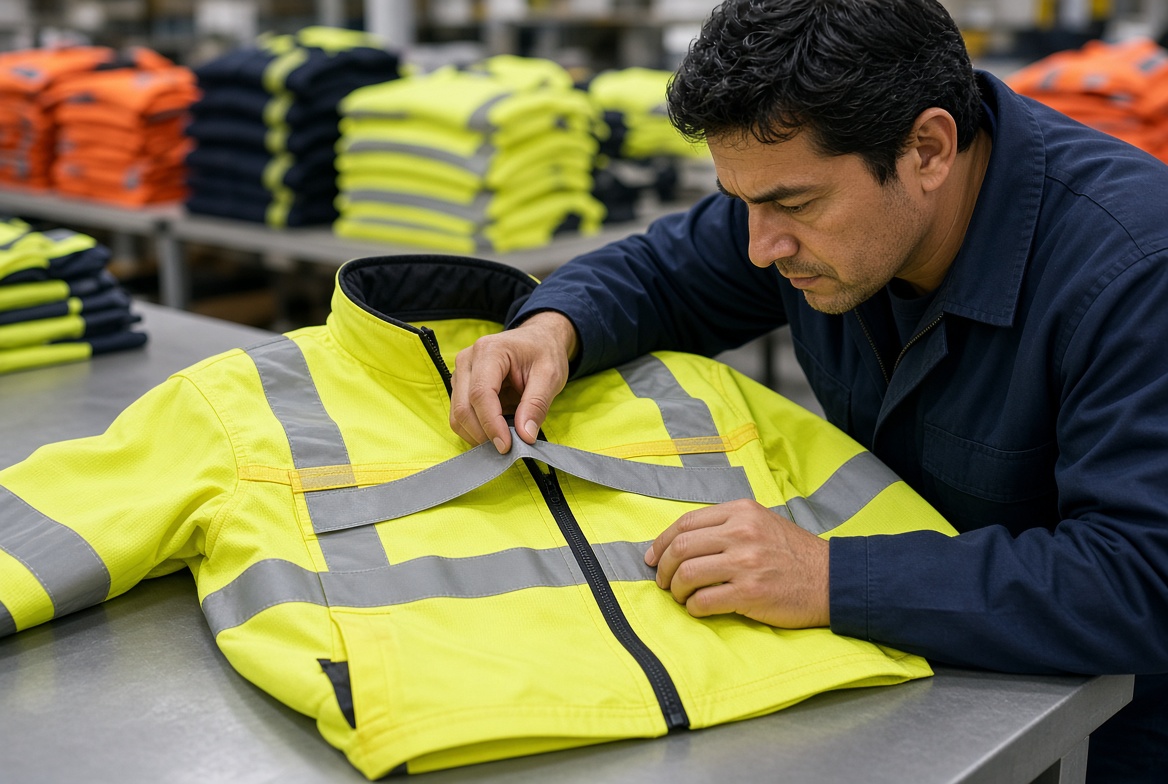
A strong uniform program should include a simple inspection routine:
1. Inspect fluorescent fabric for fading, stains, and discoloration
2. Check reflective tape for cracking, peeling, fraying, or missing sections
3. Confirm closures, sleeves, and garment fit remain functional
4. Clean garments according to the care label
5. Replace garments that no longer provide reliable visibility
For brands and distributors, offering replacement garments and clear care instructions can turn a basic product sale into a more credible workwear program.
From a manufacturing perspective, reflective work clothes should be developed as a performance product, not merely as a fluorescent garment with decorative tape.
When sourcing from an OEM workwear manufacturer, buyers should define the product brief around the end-use environment. A road construction uniform for a tropical climate requires a different fabric system from a winter highway maintenance jacket. Likewise, a contractor purchasing for night paving crews should not use the same product specification as a warehouse team.
A detailed OEM brief should include:
- Target market and required standards
- Required performance class
- Work environment and weather conditions
- Fabric composition, weight, and color
- Reflective tape type, width, and layout
- Waterproof, windproof, flame-resistant, or antistatic needs
- Logo application method and location
- Size chart and grading requirements
- Packaging and labeling specifications
- Quality inspection requirements
- Repeat-order color consistency standards
At Shanghai Youti Clothing Co., Ltd., we support overseas brands, wholesalers, and professional buyers with OEM development for uniforms and work clothes. That can include customized reflective workwear designs, branded labels, logo applications, fabric selection, size development, and production specifications aligned with the intended work environment.
For road construction crews, reflective work clothes are the safer and more responsible choice. Regular workwear can still play a role as an underlayer or for low-risk tasks, but it should not be treated as sufficient protection where workers face traffic, heavy equipment, darkness, or poor visibility.
Choose Class 2 or Class 3 high-visibility workwear based on the actual risk assessment. Then protect the investment through proper fit, maintenance, replacement, and worker training.
If you are developing a private-label road construction uniform range, sourcing reflective jackets or safety vests for wholesale, or planning customized high-visibility workwear for a contractor, contact Shanghai Youti Clothing Co., Ltd. to discuss your OEM specifications, target market requirements, branding needs, and production plan.
For workers exposed to traffic or construction equipment within applicable highway right-of-way and temporary traffic-control environments, high-visibility safety apparel is required under relevant U.S. federal guidance. The appropriate garment class must be selected according to the work conditions.
Not always. A vest may be suitable for certain daytime and lower-exposure tasks, but it offers less body coverage than a reflective jacket. Night work, high-speed traffic, poor weather, and complex work zones may call for Class 3 apparel with sleeves or a compliant garment combination.
Fluorescent fabric improves visibility in daylight and low-light daytime conditions by making the wearer stand out from the background. Retroreflective material returns vehicle headlight illumination toward the source, making the wearer more visible at night.
Both fluorescent yellow-green and fluorescent orange-red are accepted background colors under the MUTCD guidance. The best choice depends on the visual background, client requirements, local rules, and the type of work zone.
Replace garments when fluorescent fabric becomes faded or heavily stained, reflective tape cracks or peels, visibility areas are damaged, or the garment no longer fits or functions properly. Cleaning and maintenance are essential because dirt and contamination can reduce visibility.
Yes. Logos can be added through embroidery, printing, heat transfer, or patches. However, logo placement must not compromise required high-visibility background or retroreflective material coverage.
Yes. OEM reflective work clothes can be developed as breathable mesh vests, lightweight shirts, waterproof rainwear, insulated winter jackets, softshells, coveralls, and multi-layer systems based on climate and job conditions.
1. [Occupational Safety and Health Administration: High-Visibility Warning Garments]
2. [Federal Highway Administration: MUTCD 11th Edition, Part 6]
3. [U.S. Bureau of Labor Statistics: Census of Fatal Occupational Injuries Summary, 2024]
4. [Canadian Centre for Occupational Health and Safety: High-Visibility Safety Apparel]


