
Views: 267 Author: Youti Clothing Publish Time: 2026-08-09 Origin: Site


Content Menu
● Why Shirt and T-Shirt Layering Works
>> The Fit Rule: Build Space Between Layers
>> The Colour Rule: One Piece Leads
● Seven Shirt and T-Shirt Combination Ideas
>> 1. Checked Flannel Shirt With a Plain T-Shirt
>> 2. Denim Shirt With a White T-Shirt
>> 3. White Button-Up Shirt With a Neutral T-Shirt
>> 4. Printed Shirt With a Solid T-Shirt
>> 5. Overshirt With a Heavyweight T-Shirt
>> 6. Linen Shirt With a Soft Cotton T-Shirt
>> 7. Monochrome Shirt and T-Shirt Outfit
● How Brands Develop Better Layering Collections
>> Start With the Wearing Scenario
>> Match Fabric Weight to the Layering System
>> Use Samples to Test Real Wear
● Manufacturing Details That Protect Brand Quality
● Create a Shirt and T-Shirt Collection With Confidence
>> What is the best T-shirt to wear under an open shirt?
>> Should the shirt be larger than the T-shirt?
>> Can a printed shirt be worn with a graphic T-shirt?
>> Which fabrics work best for summer layering?
>> What should brands include in a shirt and T-shirt tech pack?
>> Can one shirt pattern support several seasonal collections?
A well-designed shirt and T-shirt combination is more than an easy casual outfit. It is a flexible product concept that helps fashion brands create coordinated looks, encourage multi-piece purchases, and give customers more ways to wear the same essentials.
From a garment-development perspective, the most successful open-shirt outfits are built on three principles: balanced proportions, purposeful colour contrast, and fabric compatibility. A crisp T-shirt under an overshirt, denim shirt, checked flannel, or printed button-up can look effortless—but only when the fit, weight, collar shape, and finishing details work together.
For apparel brands, wholesalers, and private-label buyers, this matters. A shirt is not simply a separate SKU, and a T-shirt is not just a basic. When developed as a coordinated system, they become a versatile casual wardrobe solution that can suit daily wear, travel, creative workplaces, streetwear capsules, resort collections, and promotional apparel programs.
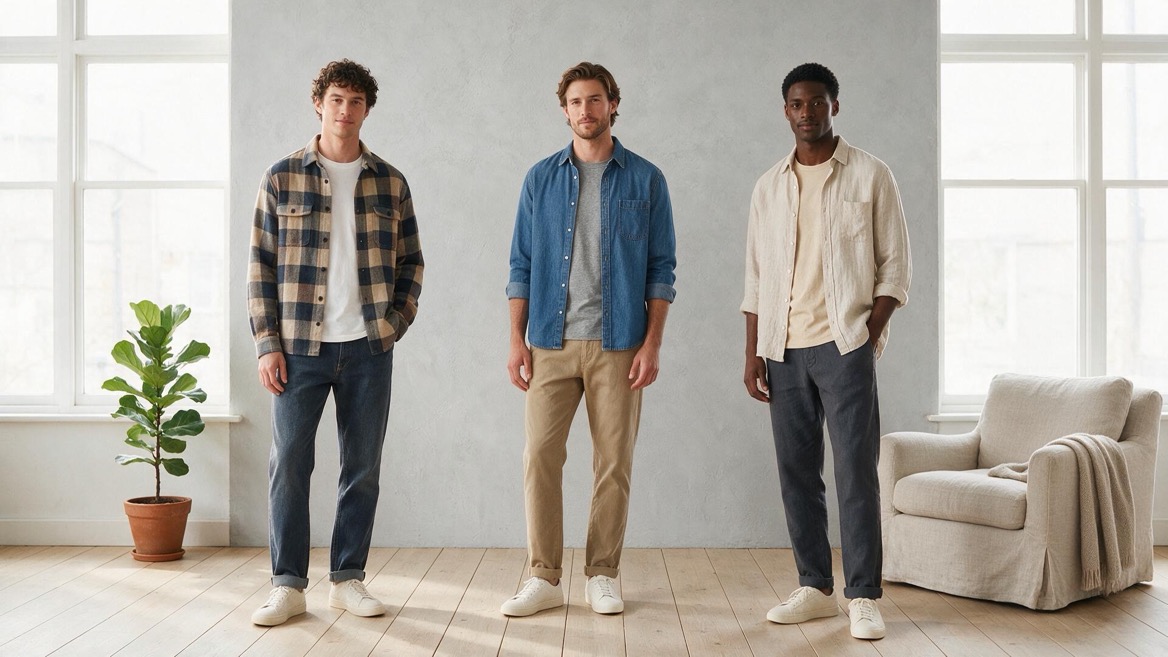
The appeal of a shirt worn over a T-shirt is simple: it adds dimension without making an outfit feel formal. The T-shirt provides comfort and a clean base layer. The shirt introduces structure, colour, texture, or print.
This combination also gives the wearer control. Leave the shirt fully open for a relaxed look, button one or two buttons for shape, or wear it closed when the temperature drops. That flexibility makes the pairing suitable for a broad range of lifestyles and climates.
For brands, the style has commercial value because it supports cross-selling. A customer who buys a shirt can be shown matching T-shirts; a customer who starts with a T-shirt can add an overshirt for a complete look.
The most common layering mistake is using two garments with the same tight fit. When both pieces cling to the body, the outfit can look restrictive and feel uncomfortable.
Use this practical rule:
- Choose a regular or relaxed-fit shirt as the outer layer.
- Select a T-shirt that sits comfortably through the chest and shoulders.
- Avoid a shirt that pulls across the upper back when worn open.
- Keep the outer shirt slightly longer than the T-shirt, or use a deliberately cropped proportion.
- Match oversized shirts with straight-leg, tapered, or relaxed trousers to avoid an unbalanced silhouette.
A lightweight shirt can sit neatly over a regular-fit crew-neck T-shirt. A heavier flannel or denim overshirt usually needs a slightly more substantial tee underneath, especially when the garment is designed for autumn or winter.
A reliable shirt and T-shirt combination does not require complex colour theory. It only needs a visual hierarchy. One garment should lead, while the other supports it.
| Outer Shirt | T-Shirt | Styling Result |
|---|---|---|
| Navy denim shirt | White or grey T-shirt | Clean and timeless |
| Checked flannel shirt | Black, white, or muted solid T-shirt | Casual and textured |
| White poplin shirt | Black, navy, or striped T-shirt | Minimal and polished |
| Printed resort shirt | Plain T-shirt matching one print colour | Coordinated and relaxed |
| Olive overshirt | Ecru, sand, or charcoal T-shirt | Utility-inspired and modern |
| Black shirt | White T-shirt | Strong contrast with minimal effort |
For a bold shirt, use a calm T-shirt. For a plain overshirt, the T-shirt can carry a graphic, stripe, texture, embroidery detail, or accent colour.
A checked flannel shirt over a plain T-shirt remains one of the most dependable casual outfit ideas. The check adds visual interest, while the solid tee prevents the outfit from becoming too busy.
For an easy everyday version, use a black, off-white, heather grey, or muted earth-tone T-shirt under a navy, brown, red, or forest-green check shirt. Pair it with dark denim and clean sneakers.
For product development, fabric weight matters. A brushed flannel works well for cooler seasons, while a lighter cotton plaid can create a year-round layer. Buyers should also check shrinkage, colour fastness, seam strength, and the consistency of check matching across front panels and pockets.
The denim shirt and white T-shirt combination is a proven casual uniform because it combines texture with simplicity. It can be worn with black jeans, stone chinos, cargo trousers, shorts, or even tonal denim.
A medium-blue denim shirt gives the clearest contrast against a white crew-neck T-shirt. Dark indigo feels sharper and more evening-ready. Washed denim creates a softer, more vintage casual mood.
For a stronger branded collection, consider offering:
- Light, medium, and dark denim washes
- Contrast stitching or tonal stitching options
- Chest-pocket variations
- Enzyme wash, stone wash, or garment-wash effects
- Embroidered logos, woven labels, or custom metal trims
The details determine whether a denim shirt feels like a standard basic or a signature product.
A white button-up shirt layered over a T-shirt gives casual dressing a cleaner edge. It is especially useful for brands targeting light business casual, travel, hospitality, resort, or modern uniform markets.
Wear a white shirt open over a black, charcoal, navy, olive, or striped T-shirt. The shirt should have enough body to hold its shape but remain breathable. Cotton poplin, Oxford, cotton-linen blends, and stretch cotton are all practical choices depending on the intended price point and climate.
This pairing works best when the shirt has thoughtful construction:
- A collar that stays neat when open
- A stable front placket
- Smooth, secure button attachment
- A hem shape designed for untucked wear
- Comfortable armhole and shoulder movement
A white shirt makes the overall outfit look more intentional, even when the rest of the styling is simple.
Printed shirts bring energy to a collection, but they need a stable base. The safest approach is to pair a printed shirt with a plain T-shirt in white, black, beige, navy, or a shade pulled directly from the print.
This is a practical formula for vacationwear, music-event merchandise, youth fashion, summer capsules, and lifestyle brands. Abstract geometry, hand-drawn illustrations, botanical motifs, nostalgic graphics, and food-inspired artwork are among the directions currently appearing in T-shirt and casual apparel design conversations.
The key is not to overload the outfit. If the shirt has a large all-over print, keep the T-shirt free from oversized graphics. If the T-shirt has a bold front print, use a quieter outer shirt in a solid colour or a low-contrast pattern.
The overshirt and heavyweight T-shirt pairing is ideal for transitional weather and modern workwear-inspired collections. It offers a more structured silhouette than a lightweight open shirt while remaining casual.
Choose twill, canvas, brushed cotton, corduroy, or heavier cotton blends for the outer layer. Pair them with a substantial T-shirt that has a stable neck rib and a clean shoulder line.
This combination suits:
- Urban utility collections
- Outdoor-inspired casualwear
- Team uniforms for creative businesses
- Streetwear and unisex ranges
- Autumn and early-spring product launches
A boxy overshirt with patch pockets can feel contemporary, while a cleaner shirt-jacket with concealed details can move closer to smart casual.
For warm-weather collections, a linen or linen-blend shirt over a lightweight cotton T-shirt offers a breathable and polished solution. This outfit works for coastal travel, resort retail, cafés, summer events, and relaxed corporate uniforms.
Use natural shades such as white, sand, oatmeal, sky blue, sage, tobacco, or faded navy. These colours pair easily with white, ecru, pale grey, and muted pastel T-shirts.
Buyers should understand that linen's natural texture is part of its appeal. However, fabric selection should be tested carefully. The right blend can improve softness, opacity, recovery, and wrinkle performance while preserving the breathable look customers expect.
A monochrome shirt and T-shirt combination uses different shades of one colour family. For example, pair a charcoal T-shirt with a black overshirt, a pale-blue tee with a deeper-blue shirt, or an ecru T-shirt with a sand-coloured linen shirt.
The result feels considered without relying on strong prints. It also allows a brand to build a compact collection in coordinated colours, making merchandising easier for retailers and clearer for customers.
For example, an earth-tone capsule might include:
1. An ecru heavyweight T-shirt
2. A sage overshirt
3. Tobacco chinos
4. A charcoal graphic tee
5. An olive utility shirt
Each piece can be sold independently, yet the colour story encourages complete-look purchases.
A good garment concept is only the starting point. To convert styling ideas into consistent bulk apparel, brands need to define specifications before sampling begins.
The first question is not "What colour should we use?" It is "Where and how will customers wear this?"
A travel-focused brand may need breathable, wrinkle-tolerant fabrics. A streetwear label may prefer oversized silhouettes, heavier jersey, and statement prints. A business-casual program may need refined colours, easy-care fabrics, and reliable size grading.
Define the use case first:
- Weekend casualwear
- Retail fashion collection
- Resort or summer clothing
- Corporate casual uniform
- Branded merchandise
- Outdoor utility apparel
- Promotional or event apparel
This decision guides fit, fabric, finishing, packaging, and pricing.
Fabric weight affects comfort, drape, durability, and the visual relationship between shirt and T-shirt.
| Garment | Common Fabric Direction | Development Focus |
|---|---|---|
| Everyday T-shirt | Cotton jersey or cotton blend | Neck recovery, softness, shape retention |
| Premium heavyweight tee | High-density cotton jersey | Structure, opacity, durable rib collar |
| Summer shirt | Cotton poplin, linen, or linen blend | Breathability, smooth finish, light drape |
| Flannel shirt | Brushed cotton plaid | Warmth, check alignment, reduced pilling |
| Denim shirt | Cotton denim or denim blend | Wash effect, shrinkage control, seam durability |
| Overshirt | Twill, canvas, corduroy, or heavier cotton | Structure, pocket reinforcement, movement |
A shirt and T-shirt combination should feel coordinated in hand. A very thin, flimsy tee beneath an extremely heavy overshirt can look disconnected. Likewise, a thick T-shirt beneath a lightweight, transparent shirt may create unwanted bulk.
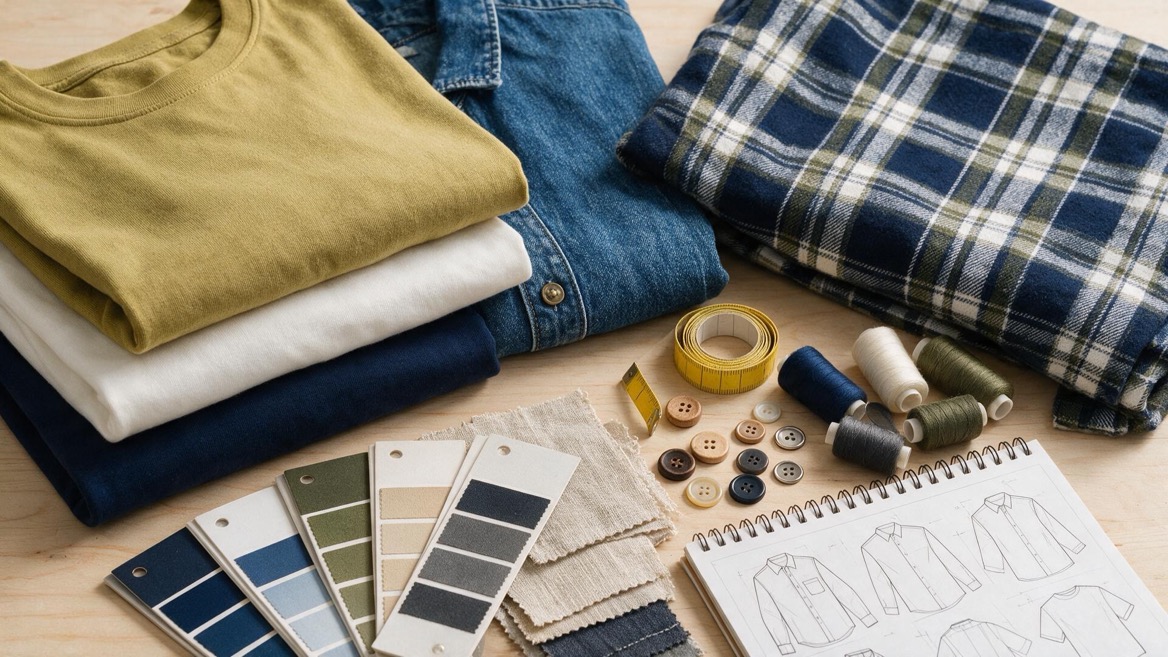
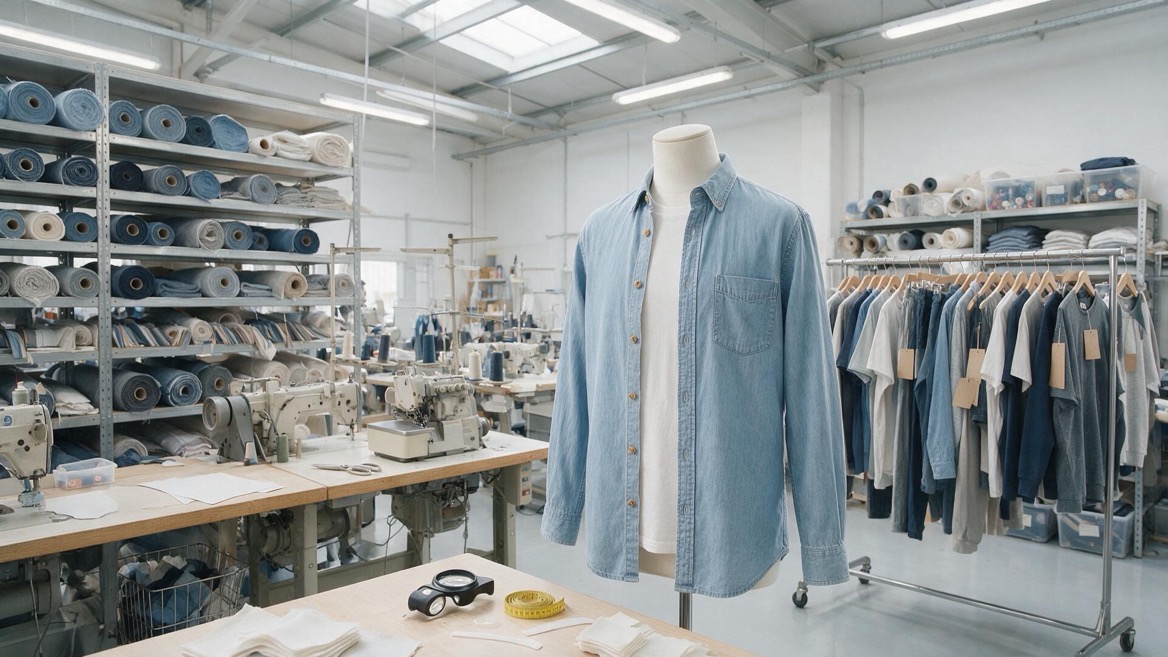
Flat measurements alone cannot reveal every problem. Before approving bulk production, assess a complete layered outfit on a fit model or dress form.
Check the following:
- Does the shirt pull across the back over the T-shirt?
- Is the T-shirt neckline still visible and stable after washing?
- Does the shirt collar sit correctly when worn open?
- Are the sleeve lengths visually balanced?
- Does the shirt hem hang cleanly over the tee?
- Do print colours and garment washes match approved standards?
- Are buttons, labels, seams, and pocket placements consistent?
This testing stage can prevent costly revisions after production starts. It also helps brands create more accurate product imagery, size guidance, and styling content.
A casual outfit may look simple, but its quality is built through many small decisions. In shirt and T-shirt production, consistency is often more important than adding unnecessary decoration.
For T-shirts, buyers should define fabric composition, GSM, shrinkage tolerance, collar rib specification, stitch density, print method, label placement, and folding method. For shirts, the tech pack should cover collar construction, cuff style, button material, placket width, pocket dimensions, seam allowance, pattern alignment, wash process, and final measurements.
At Shanghai Youti Clothing Co., Ltd., the production workflow can cover fabric selection, sample development, bulk manufacturing, quality inspection, and shipment coordination. The company states that it operates a 2,500-square-metre workshop, six sewing lines, more than 300 pieces of machinery, and annual production capacity exceeding 1.4 million pieces. This makes structured communication and approved pre-production standards essential for maintaining consistency across repeat orders.
The strongest supplier relationships are built on clarity. Share the target customer, reference samples, size chart, fabric expectations, artwork files, packaging requirements, and inspection standards before development begins.
A clear brief produces a clearer sample. A clearer sample protects the final collection.
The best shirt and T-shirt combinations are not based on random layering. They use contrast, proportion, fabric weight, and a clear wearing purpose to make casual clothing feel more versatile and more valuable.
For brands, wholesalers, and apparel businesses, this is an opportunity to build coordinated collections rather than isolated garments. A well-developed T-shirt can anchor several shirts. A single overshirt shape can support multiple fabrics and seasonal colourways. A thoughtful capsule can generate more styling options without creating unnecessary complexity.
Shanghai Youti Clothing Co., Ltd. supports OEM apparel development for shirts, T-shirts, business casualwear, uniforms, and related garment programs. Send your tech pack, reference images, fabric requirements, size range, and estimated order quantity to begin a custom sampling discussion.
A plain crew-neck T-shirt in white, black, grey, ecru, or navy is the most versatile choice. Use a regular fit for a clean everyday look or a heavier relaxed-fit tee for overshirt and streetwear styling.
Usually, yes. The outer shirt needs enough room through the shoulders, chest, and armholes to sit comfortably over the T-shirt. It does not need to be excessively oversized unless that is the intended design direction.
It can, but the risk of visual clutter is high. Use one focal point: either a printed shirt with a solid tee or a graphic T-shirt with a plain overshirt. If both have graphics, keep one subtle and use a limited colour palette.
Cotton poplin, lightweight cotton, linen, linen blends, and breathable jersey are practical choices. Choose lighter colours and avoid overly heavy fabrics when the collection is intended for hot or humid climates.
Include garment measurements, fabric composition and weight, colour codes, trims, construction details, artwork placement, labels, packaging, care instructions, grading rules, and quality requirements. Reference photos alone are not enough for reliable production.
Yes. A strong base pattern can be adapted through fabric, colour, wash, pocket design, collar details, trims, and print treatment. This approach can reduce development time while giving each collection a distinct identity.
- Bombay Shirt Company. *Casual Outfit Ideas: Shirt and T-shirt Combinations.* Useful background on classic pairings including checked shirts, denim shirts, white shirts, printed shirts, and open-shirt styling. [Read the original article]. [bombayshirts]
- Shanghai Youti Clothing Co., Ltd. *China Custom Workwear & Corporate Business Suit OEM Manufacturer.* Company information covering stated workshop scale, equipment, sewing lines, annual capacity, apparel categories, and service workflow. [View company information]. [work-jacket]
- Printful. *15 T-Shirt Design Trends for 2026.* Industry design reference covering current directions such as nostalgia, bold graphics, food art, Y2K influences, hand-sketched artwork, minimalism, typography, and mixed media. [Explore the trend report]. [printful]
- Outsons. *How to Wear a Classic Shirt and T-Shirt Combination.* Supplementary styling reference on fit, colour contrast, flannel, denim, white T-shirts, and smart-casual layering. [Read the styling guide]. [outsons]
- Merchifies. *How to Master the "Shirt With T-Shirt" Look.* Supplementary reference for seasonal layering examples, including denim, flannel, chambray, linen, and overshirt combinations. [Read the guide]. [merchifies]


