
Views: 229 Author: Youti Clothing Publish Time: 2026-08-02 Origin: Site


Content Menu
● Why Source Office Attire Women From China
● How We Evaluate a High-Quality Office Attire Women Supplier
● Selection Criteria for This Top 10 List
● The Top 10 Office Attire Women Manufacturers in China
>> 1. Shanghai Youti Clothing Co., Ltd. — Flexible OEM Partner for Growing Brands
>> 2. Zhejiang Formal Suiting Group
>> 3. Guangdong Business Attire Manufacturing Co.
>> 4. Jiangsu Elegance Womenswear Factory
>> 5. Shanghai Corporate Uniform Solutions Ltd.
>> 6. Guangzhou Tailored Office Wear Co.
>> 7. Fuzhou Professional Apparel Manufactory
>> 8. Shenzhen Modern Office Fashion Co., Ltd.
>> 9. Qingdao Institutional Uniform Trading Co.
>> 10. Taian Large-Scale Corporate Apparel Group
● Comparison Table: Capacity, MOQ, and Certifications
● Common Sourcing Pitfalls in Office Attire Manufacturing
● The Internal "Avoid-the-Traps" Guide Buyers Rarely Discuss Publicly
● Buyer's Guide: From Shortlist to Stable Partnership
>> Sample and Tech Pack Process
>> Logistics and Compliance Notes
● FAQs
China's professional womenswear supply base offers procurement managers a rare combination of technical depth, industrial clusters, and OEM flexibility for sourcing office attire that must look sharp, hold shape, and ship on time.
China's women's apparel market reached roughly hundreds of billions of yuan in scale by 2023, and the country still accounts for a leading share of global apparel export value, giving buyers access to a dense, mature supply ecosystem for tailored womenswear. This scale means buyers can find everything from basic polyester blazers to structured wool-blend suiting within the same regional sourcing network, rather than piecing together multiple countries for a single collection.
Industrial clusters matter here just as much as in electronics or furniture. Regions such as Jiangsu, Zhejiang, Guangdong, and Shanghai concentrate weaving, dyeing, lining production, button and zipper accessories, and garment assembly for formal and business womenswear, which shortens lead times and reduces the coordination burden on overseas buyers. At the same time, more factories serving export markets have adopted quality and social compliance systems that align with international audit expectations, which is a meaningful shift from a decade ago when documentation was inconsistent.

Before shortlisting any factory, a structured evaluation framework helps separate manufacturers with real, repeatable production capability from those that only look strong in an online catalog.
- Factory certifications and audits: ISO 9001 for documented quality management, plus social compliance audits such as BSCI or WRAP for buyers selling into the EU or North America, and environmental/chemical compliance such as REACH or OEKO-TEX for fabric safety.
- R&D and pattern development: in-house ability to grade sizes for different body types across regions, translate tech packs into production-ready patterns, and work with structured fabrics (wool-blend suiting, ponte knits, stretch twill) that need precise tailoring.
- Quality control workflow: incoming fabric inspection for GSM, colorfastness and shrinkage, in-process checks on seam strength and lining alignment, and a final AQL-based inspection before packing.
- Delivery reliability and capacity: transparent monthly output figures for blazers, trousers, skirts, and dresses, with a track record of on-time repeat orders rather than only strong first-order performance.
- OEM/ODM depth: capability to support smaller MOQs for emerging brands while still running large rolling programs, plus technical support for branding such as label placement, lining prints, and packaging.
This framework forms the basis for the shortlist below, which mixes large-scale exporters with smaller, more agile OEM partners.
To keep this guide practical for procurement teams rather than a generic name list, the following filters were applied:
- Office attire or business womenswear (blazers, tailored trousers, pencil skirts, sheath dresses, blouses) as a core or significant product line.
- Demonstrated export experience with English-language communication channels for overseas buyers.
- Evidence of OEM/ODM capability, including custom pattern work and branding support.
- At least 8–10 years of operating history or a clear, fast-growing export track record.
- Verifiable or commonly cited quality indicators (ISO 9001, BSCI, WRAP, or robust internal QC systems).
This list is a starting point for supplier screening, not a final recommendation. Buyers should still run their own factory audits and lab testing before committing to long-term programs.
Shanghai Youti Clothing Co., Ltd. focuses on professional garments for overseas brands, wholesalers, and distributors, with a product range that extends into tailored office and workwear lines built for OEM customization rather than pure commodity output. Its positioning targets buyers who need a balance of cost efficiency, design flexibility, and responsive communication, which is often the deciding factor for small and mid-sized brands entering a new market.
- Core strengths: cost-efficient OEM production with flexible, project-based MOQs; strong attention to fit and construction details relevant to office wear (lining quality, seam finishing, structured shoulders); efficient, buyer-friendly communication oriented toward long-term partnership rather than one-off orders.
- OEM/ODM scope: full support from concept and tech pack refinement through sampling, bulk production, and branding elements such as labels and trims, with the ability to adjust designs for different regional fit preferences.
- Ideal for: importers, distributors, and emerging office-wear brands that need consistent quality and close communication at moderate volumes, including first-time OEM projects or seasonal line extensions.
Pairing a large-scale specialist with a flexible partner such as Shanghai Youti allows buyers to balance cost, risk, and responsiveness across a diversified product portfolio.
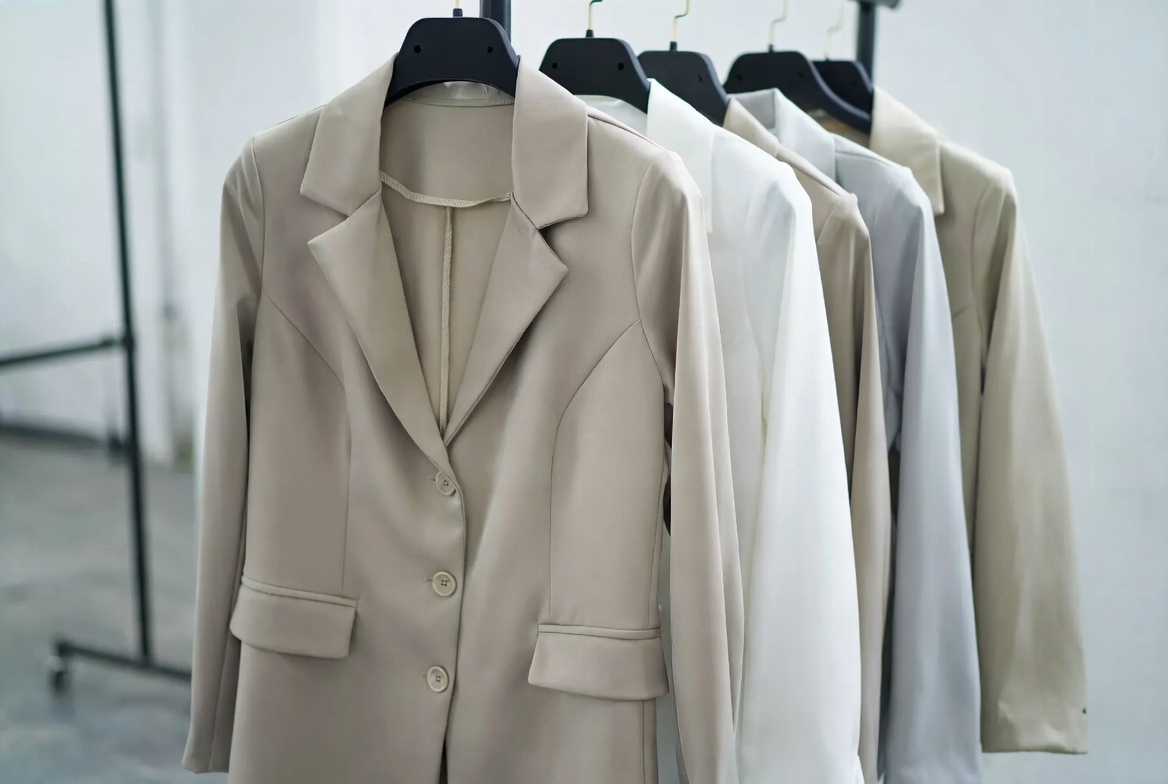
This Zhejiang-based manufacturer, with roots in the region's established suiting and tailoring cluster, has built its reputation on structured blazers and matching trouser or skirt sets for corporate uniform programs. It typically runs a mid-to-large production scale with dedicated tailoring lines separate from casualwear.
- Core strengths: structured tailoring, wool and wool-blend fabric sourcing, consistent silhouette across bulk orders.
- OEM/ODM scope: custom colorways, corporate logo embroidery on linings, and full uniform-set development.
- Main markets: corporate offices, airlines, and hospitality groups in Asia, Europe, and the Middle East.
Based in the Guangdong export corridor, this factory serves both domestic and international corporate clients with blouses, blazers, and dress sets. It has typically operated for 15+ years and supports both bulk corporate programs and smaller brand orders.
- Core strengths: diverse fabric handling (cotton-blend, polyester, stretch twill), stable sizing for large staff deployments.
- OEM/ODM scope: color matching to brand identity, fabric upgrades for breathability, and full seasonal collection development.
- Main markets: corporate offices and retail brands across Asia-Pacific and the Middle East.
Positioned in the Jiangsu textile cluster, this manufacturer emphasizes design-forward business attire that balances brand image with day-to-day comfort, an increasingly common request from fashion-conscious corporate clients.
- Core strengths: fashion-forward corporate silhouettes, attention to fit across different body types, in-house design assistance.
- OEM/ODM scope: custom design services, branding integration, and full seasonal collections for retail and corporate clients.
- Main markets: fashion-forward corporate and retail buyers in North America and Europe.
With roughly two decades of experience, this company covers corporate uniforms, office wear, and hospitality-adjacent formalwear, positioning itself on the balance between comfort, durability, and a polished corporate appearance.
- Core strengths: balanced functionality and appearance, consistent quality across large staff programs.
- OEM/ODM scope: style customization, corporate color matching, and full uniform program management.
- Main markets: corporate offices, financial institutions, and service industries.
Operating for over 20 years in the Guangzhou apparel hub, this factory specializes in custom-made office attire across a wide fabric range, supporting varied professional segments within the same production program.
- Core strengths: customization depth, diverse fabric options, ability to manage multiple sub-brands or departments within one client account.
- OEM/ODM scope: end-to-end support from fabric selection and design to bulk production and branding.
- Main markets: corporate groups, transportation companies, and financial services firms.
Founded in the early 2000s, this manufacturer provides office and institutional womenswear with an emphasis on material selection and consistent production equipment to maintain quality across repeat orders.
- Core strengths: reliable mid-to-high-volume output, broad category coverage across office and institutional wear.
- OEM/ODM scope: design assistance, custom patterns, and flexible production for corporate and educational clients.
- Main markets: global buyers needing reliable, mid-to-high-volume office wear.
Combining garment manufacturing with a stronger in-house design function, this Shenzhen-based factory targets buyers who want office attire that reflects contemporary brand image without sacrificing practicality.
- Core strengths: stylish, fit-focused corporate designs; responsive sampling process.
- OEM/ODM scope: custom design development, branding integration, and full seasonal collections.
- Main markets: retail and corporate brands seeking fashion-forward office wear.
Positioned as a supplier covering corporate, hospitality, and institutional office wear, this company runs modern manufacturing facilities and emphasizes tailored solutions for varied client requirements.
- Core strengths: flexible production planning, custom design services, experience across multiple institutional sectors.
- OEM/ODM scope: project-based design and development, including full uniform systems for institutions and brands.
- Main markets: domestic and international buyers seeking tailored office-wear programs.
This large exporter has delivered high-volume corporate and functional apparel programs over nearly two decades, operating ISO 9001- and BSCI-certified facilities with significant total annual capacity across multiple production sites.
- Core strengths: large-scale production, strong compliance portfolio, multi-site manufacturing footprint.
- OEM/ODM scope: complete development of technical and corporate apparel for established global brands.
- Main markets: North America, Europe, Australia, and other developed markets.
| Manufacturer | Typical Positioning | Approx. Monthly Capacity | Typical MOQ | Known/Typical Certifications |
|---|---|---|---|---|
| Shanghai Youti Clothing Co., Ltd. | Flexible OEM for SMEs, office attire | Low-to-mid volume | 150–300 pcs/style | Internal QC, export-oriented systems |
| Taian Large-Scale Corporate Apparel Group | Large-scale corporate apparel | Very high volume | 500–1,000+ | ISO 9001, BSCI |
| Zhejiang Formal Suiting Group | Structured tailoring specialist | Mid-to-high volume | 300–600 | Internal QC, ISO 9001 (to verify) |
| Guangdong Business Attire Manufacturing | Multi-sector corporate wear | Mid-to-high volume | 300–600 | Internal QC, possible ISO/BSCI |
| Jiangsu Elegance Womenswear Factory | Design-forward corporate wear | Mid volume | 200–500 | Internal QC, design-driven workflow |
| Shanghai Corporate Uniform Solutions | Balanced comfort/appearance | Mid volume | 200–500 | Internal QC systems |
| Guangzhou Tailored Office Wear Co. | Multi-sector custom office wear | Mid volume | 200–600 | Internal QC, possible ISO/BSCI |
| Fuzhou Professional Apparel Manufactory | Institutional/office wear | Mid volume | 200–500 | Internal QC systems |
| Shenzhen Modern Office Fashion Co. | Fashion-forward corporate wear | Mid volume | 200–500 | Internal QC, design-driven workflow |
| Qingdao Institutional Uniform Trading | Flexible custom solutions | Low-to-mid volume | 200–400 | Trading plus manufacturing audits |
Indicative values only; buyers should verify actual figures directly during RFQ and factory audits.
Problems with office attire usually surface months after delivery, when fabric pills, colors fade after dry cleaning, or linings separate from shells under regular wear.
- Over-prioritizing unit price over lifecycle cost: ultra-cheap shell fabrics or linings lead to pilling, shine marks, and early seam failure, driving up total replacement cost over a multi-year uniform program.
- Treating office attire as "fashion" rather than "functional equipment": designs approved only on a fit model may restrict movement or fail after repeated dry cleaning cycles.
- Inadequate lining and interfacing control: cheap fusible interfacing can bubble or separate after a few washes, especially in blazers and structured skirts.
- Inconsistent size blocks across production batches: without a locked size specification, repeat orders can drift in fit, causing employee complaints and costly alterations.
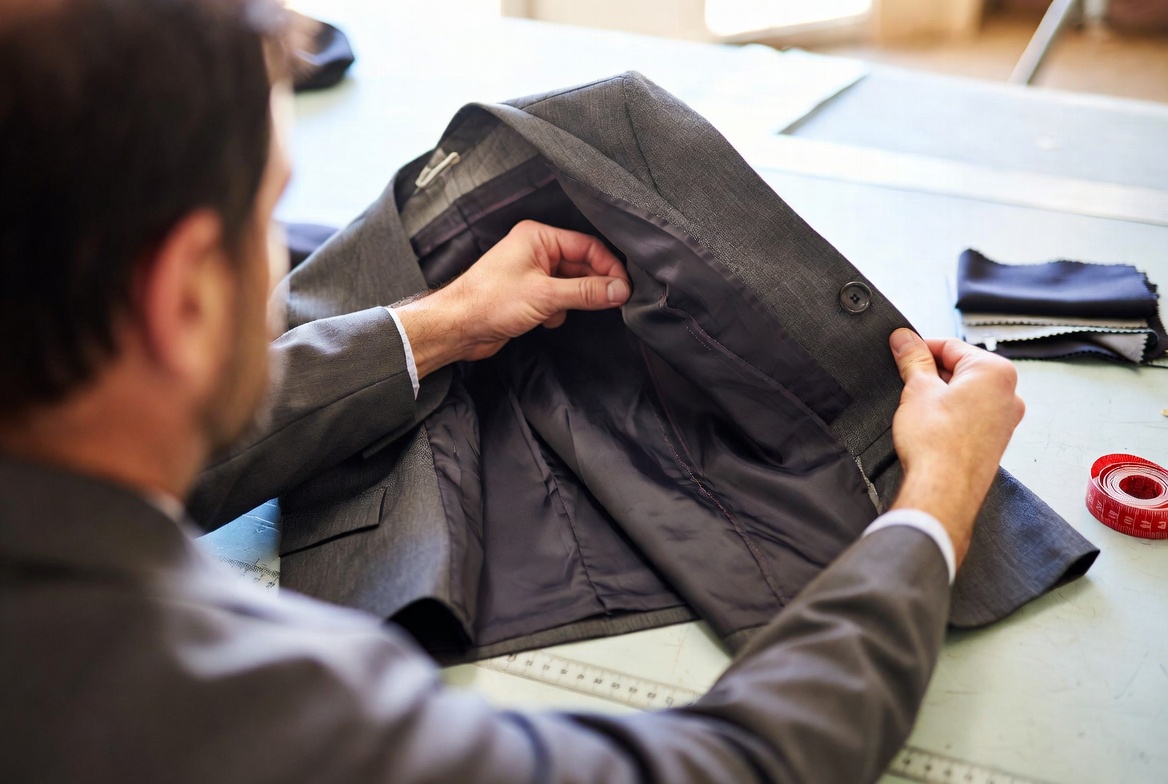
One practice experienced procurement teams use but rarely publish is running a multi-stage destructive test on pre-production samples rather than relying on visual inspection alone. This typically includes washing or dry-cleaning samples 8–10 cycles to check colorfastness, shrinkage, and lining adhesion; stress-testing seams and buttonholes to simulate daily wear; and conducting a small internal wear trial with staff before approving bulk production. Factories confident in their materials and construction usually welcome this level of testing and may even share internal test reports, while weaker suppliers tend to resist or delay the process.
Request full company profiles, product catalogs, and photos or videos of workshop and QC areas. Ask for copies of ISO 9001, BSCI, or WRAP certificates and check the certificate number, scope, issue and expiry dates, and legal entity name against the certification body's online database to confirm the certificate is current and actually covers garment manufacturing.
Prepare detailed tech packs covering fabric composition, GSM, color codes, applicable standards, size charts, and branding guidelines, and always request pre-production samples along with a size set to check pattern grading. For any embroidery or printed branding, provide vector artwork and Pantone references with clear placement diagrams to avoid inconsistency across production runs.
Align Incoterms (FOB, CIF, DAP) early and clarify responsibility for export clearance, HS codes, and customs documentation. For shipments into the EU or North America, confirm that fabrics and any relevant test reports meet chemical and safety regulations such as REACH, and consider dual-sourcing with a large exporter plus a flexible OEM partner to mitigate supply-chain risk.
China remains a central sourcing base for office attire women's apparel, offering a mix of large-scale exporters and agile OEM partners suited to brands of different sizes and growth stages. Procurement managers get the best long-term results by moving past catalog comparisons and systematically testing suppliers on process control, fabric consistency, and communication quality before committing to multi-year programs. If you're currently refreshing your supplier list, a practical next step is to shortlist three to five factories — combining a larger compliance-heavy player with a flexible OEM partner such as Shanghai Youti Clothing Co., Ltd. — and run structured sampling before locking in contracts.
How can I verify if a factory's ISO 9001 certificate is genuine and not expired?
Request the original certificate with certificate number, issuing body, accreditation mark, scope, and validity dates, then search that number on the certification or accreditation body's website to confirm the scope covers garment manufacturing rather than trading alone.
What is a realistic MOQ for custom office attire from Chinese OEM factories?
Large, highly automated plants often require 500–1,000 pieces per style or color, while more flexible OEM suppliers can support 150–300 pieces per style, which suits new brand launches or regional pilots better.
How do I ensure fabric consistency across repeat orders for a multi-year uniform program?
Specify fabric composition, GSM, weave, and finishing precisely in the tech pack, lock in a nominated fabric mill, and request swatches with lab test reports so future lots can be matched against an approved standard.
What's the best way to control lining and embroidery quality at Chinese factories?
Mandate a separate strike-off or lining sample approval before bulk production, and define thread type, backing material, and print curing parameters clearly in the QC checklist for on-site verification.
How can I tell if a factory can handle a multi-year, multi-country uniform program rather than a one-off order?
Review current key clients and program sizes with references where possible, and assess whether the factory has scalable capacity, a formal planning department, and defined processes for reorders and size replenishment rather than treating each PO as an isolated job.
- Statista, Apparel Industry in China topic overview [statista]
- Statista, China's Share of Global Apparel Export Value [statista]
- Youti Clothing, Top 10 Work Uniforms Manufacturers in China [work-jacket]
- China Checkup, ISO 9001 Certification Verification Guide [chinacheckup]


