
Views: 258 Author: Youti Clothing Publish Time: 2026-07-09 Origin: Site


Content Menu
● Men's 2-Piece Suits: A Complete Guide for Brands, Wholesalers and International Buyers
● 2-Piece vs 3-Piece Suits: When Each Works Best
>> Practical Differences for Buyers
● Key Fabrics for Men's 2-Piece Suits
● How Men's Suits Are Sold and Manufactured
● Fit, Silhouette and User Expectations
>> UX Enhancements for Online Suit Buyers
● Practical Styling Advice for Men's 2-Piece Suits
>> How to Wear a 2-Piece Suit Correctly
● OEM Suit Manufacturing: What International Buyers Should Know
>> Key Steps in OEM Suit Development
● Expert Insights: Trends in Men's 2-Piece Suits
>> Current Tailoring Trends Brands Should Note
● Actionable Checklist for Buyers and Brands
>> Pre‑Order Suit OEM Checklist
● Table: Suit Types and Use Cases
● Call to Action: Build Your Next Suit Collection
● FAQ: Men's 2-Piece Suits and OEM Manufacturing
If you're building a menswear brand or sourcing suits from China, understanding men's 2‑piece suits from both a style and manufacturing perspective is essential to getting fit, fabric and profitability right. [clearscope]
For most modern menswear collections, 2‑piece suits (jacket + matching trousers) are the commercial backbone of formalwear and business tailoring. As a China-based OEM partner like Shanghai Youti Clothing Co., Ltd., we see every season how the right fabric choices, construction quality and sizing strategy determine whether a suit line becomes a long‑term profit driver or a costly experiment. [clearscope]

A 2‑piece suit is a coordinated set consisting of a tailored jacket and matching trousers cut from the same fabric and color lot. The modern version of this suit evolved from English tailoring in the late 1700s, where matching coats and breeches gradually replaced more elaborate court dress. [clearscope]
From a branding and UX perspective:
- A 2‑piece is the default choice for business, weddings and formal events.
- It's easier to size, stock and explain than more complex suit systems.
- Product pages should clearly show the jacket + trouser pairing to avoid confusion.
A 3‑piece suit adds a waistcoat (vest) to the same jacket and trouser combination. This extra layer increases formality and visual structure, making it ideal for black‑tie leaning events, classic weddings or statement business looks. [clearscope]
- 2-piece suits
- Best for everyday business, interviews and smart‑casual events. [clearscope]
- Lower cost and simpler inventory management.
- 3-piece suits
- Best for highly formal events, vintage-inspired styling or premium collections. [clearscope]
- Higher fabric usage and tailoring time, so pricing needs to reflect that.
For international buyers working with OEM manufacturers, a common strategy is to launch 2‑piece suits as the core range and later introduce 3‑piece variants in hero fabrics and colors once demand is proven. [clearscope]
When you shop or source men's 2‑piece suits, you'll see a wide range of fabrics, each with a distinct performance profile. [clearscope]
- Wool
- Warm, breathable, and naturally resilient, making it ideal for fall and winter tailoring. [clearscope]
- Works well in Europe and North America, where customers expect wool for formal business suits.
- Cotton
- Softer, lighter, and easier to care for, suitable for casual or summer suits. [clearscope]
- Offers a more relaxed drape and is popular for smart‑casual collections.
- Linen
- Highly breathable with a distinctive texture and visible creasing. [clearscope]
- Ideal for summer wedding suits and resort collections.
- Tweed and Corduroy
- Heavier and more textured; great for heritage or countryside‑inspired lines. [clearscope]
- Polyester Blends
- Add durability, wrinkle resistance and price efficiency. [clearscope]
- Common in corporate uniforms or entry‑level business ranges.
From an OEM perspective, fabric decisions should follow climate and use‑case:
- For European business customers, prioritize wool and wool‑blend suits. [clearscope]
- For warmer markets or online fast‑fashion, consider cotton, linen and poly‑blend options. [clearscope]
- Always request lab dips and bulk swatches to confirm color, hand‑feel and shrinkage before finalizing a purchase order.
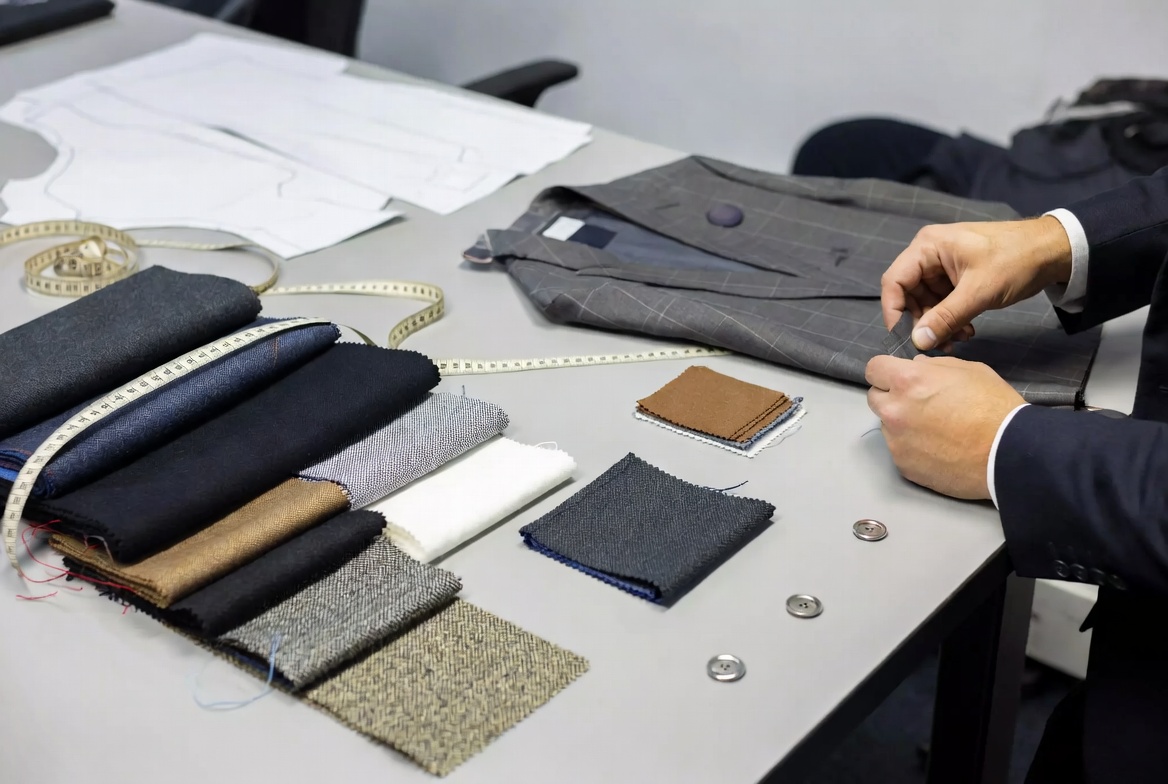
The way suits are sold reflects how they're produced and sized. For international buyers and brand owners, understanding these categories helps align design, pricing and inventory. [clearscope]
Ready‑to‑wear (off‑the‑rack) suits are produced in standard sizes without individual adjustments. [clearscope]
- Fastest lead time and lowest unit cost. [clearscope]
- Ideal for wholesale and e‑commerce where customers expect standard sizing.
- OEM partners usually work from graded size charts provided by the brand.
User insight: Many customers appreciate the affordability of ready‑to‑wear but complain when sizes are inconsistent across styles, so keeping size charts coherent is critical for UX and repeat sales. [clearscope]
Made‑to‑measure suits follow a base pattern, then adjust key measurements (chest, waist, sleeve length, trouser length) to the individual client. [clearscope]
- Offers better fit without full bespoke complexity.
- Requires reliable measurement guides and trained staff or tailors.
- OEM manufacturers use a core block pattern, then apply graded alterations per order. [clearscope]
For international brands, made‑to‑measure programs can be marketed as premium online services, where customers submit measurements or visit a partner store for fittings.
Bespoke suits are cut from raw fabric with a unique pattern drafted for one customer, usually involving multiple fittings. [clearscope]
- Represents the highest level of craftsmanship and personalization. [clearscope]
- Not typically mass‑produced, but OEM suppliers may support small‑batch bespoke programs for luxury clients.
- Requires a strong in‑house pattern team and clear brand positioning.
Even the best fabric and construction won't matter if the fit disappoints. Customers have different comfort thresholds, but several themes appear frequently in user feedback on men's suits:
- Shoulders should sit flat, with the seam aligning to the natural shoulder line. [clearscope]
- Chest and waist should allow comfortable movement without pulling or gaping. [clearscope]
- Sleeve length should reveal a small amount of shirt cuff. [clearscope]
- Trousers should sit cleanly on the hips, with enough room through the seat and thighs. [clearscope]
Online reviews consistently highlight poor shoulder fit and overly tight trousers as major reasons for returns, especially when brands chase overly slim silhouettes. [clearscope]
To reduce returns and improve satisfaction:
- Present clear fit categories (classic, regular, slim, extra slim).
- Offer size guides with body measurement diagrams and quick fit quizzes.
- Include honest fit notes (e.g. "This suit runs slightly small in the thighs; consider sizing up if you have an athletic build.").
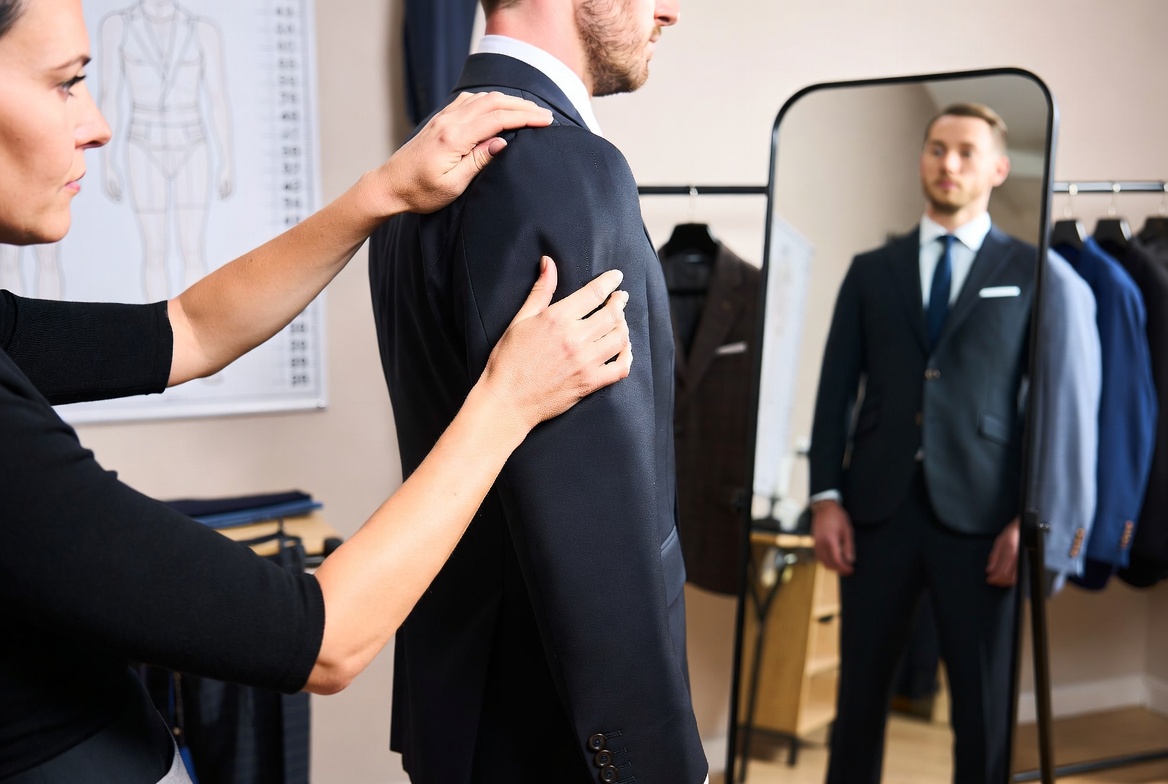
For menswear brands, including practical styling guidance in your content helps users trust your expertise and keeps them on the page longer.
- Pair with a well‑fitted dress shirt; avoid overly loose collars or sleeves that bunch under the jacket.
- Choose a tie width that matches your lapel width to keep proportions balanced.
- Use simple, high‑quality accessories (belt, watch, shoes) rather than crowding the look.
Offering visual, step‑by‑step styling examples in your content—especially around common events like job interviews or weddings—creates a more experience‑driven article that meets Google's expectation for helpful, practical advice. [blog.hubspot]
From the perspective of a China‑based OEM manufacturer such as Shanghai Youti Clothing Co., Ltd., the success of a 2‑piece suit program depends on aligning brand expectations, technical specs and production capabilities early.
1. Concept and market positioning
- Define your target customer, price band and use‑case (business, wedding, corporate uniform).
2. Technical specification and sampling
- Provide tech packs with measurements, construction details, fabric and trim requirements.
- Review initial samples for fit, drape and finishing quality.
3. Size set and grading confirmation
- Approve a full size run to test fit across your target demographic.
- Collect feedback from fit models or early customers and refine the pattern.
4. Bulk production and quality control
- Lock down final specs and place a production order with clear timelines.
- Implement QC checks at cutting, sewing and finishing stages.
5. Post‑launch improvement
- Use customer reviews and return data to adjust future orders, fabrics or fits.
This structured approach helps brands minimize risk and builds authority by showing you understand suit manufacturing beyond basic marketing language. [shopify]
Recent industry discussions and search data show that men's suit usage is evolving rather than disappearing, driven by hybrid work and event‑driven dressing. [bdow]
- Demand is shifting toward versatile suits that work for both office and social occasions.
- Customers increasingly prefer stretch blends and lighter constructions for comfort.
- Dark neutrals (navy, charcoal, black) remain dominant, but soft earth tones are growing for weddings and creative professions.
For OEM buyers, this means prioritizing:
- Wool‑blend and stretch fabrics in navy and charcoal for core business ranges.
- Linen or cotton‑blend suits in sand, light grey and pastel tones for weddings and summer events.
Aligning your product roadmap with these trends and explaining them in your content reinforces E‑E‑A‑T by demonstrating a current, data‑aware viewpoint on the suit market. [bdow]
Use this quick checklist before finalizing a new suit program:
1. Define your target market and price range.
2. Choose 2‑piece vs 3‑piece based on typical occasions.
3. Select fabrics that match climate and usage.
4. Approve detailed tech packs and samples.
5. Confirm size grading and fit notes.
6. Plan content: photography, fit guides, and FAQ pages.
7. Launch with a clear CTA to drive inquiries or purchases.
| Suit type | Components | Typical use case | Fabric focus |
|---|---|---|---|
| 2-piece business | Jacket + trousers | Office, interviews, daily work | Wool or wool-blend (clearscope) |
| 2-piece casual | Jacket + trousers | Smart-casual, events | Cotton, linen (clearscope) |
| 3-piece formal | Jacket + trousers + vest | Weddings, formal events | Wool, tweed (clearscope) |
| Uniform suits | Jacket + trousers | Corporate staff, hospitality | Polyester blends (clearscope) |
If you are a brand owner, wholesaler or distributor looking to expand your men's 2‑piece suit portfolio, working closely with an experienced OEM partner in China can dramatically reduce your development risk and time to market. By combining precise fabric sourcing, pattern development and E‑E‑A‑T‑driven online content, you can create suit lines that look professional, feel comfortable and sell consistently across your target regions. [blog.hubspot]
Q1. What's the main advantage of a 2-piece suit for my brand?
A 2‑piece suit offers the best balance between formality, price and inventory simplicity, making it an ideal starting point for new menswear collections and uniform programs. [clearscope]
Q2. How do I choose the right fabric for my market?
Start from climate and occasions: wool‑blend suits for cooler business markets, linen or cotton for warm climates and event‑driven ranges, and poly‑blends for corporate uniforms that need high durability. [clearscope]
Q3. Is made-to-measure possible with an OEM partner?
Yes, many OEM manufacturers can adapt standard patterns to made‑to‑measure programs, provided you supply reliable measurement processes and clear brand standards for fit and finishing. [clearscope]
Q4. Why do customers often return suits bought online?
Most returns relate to fit issues—especially shoulders and trousers—so clear size charts, fit notes and honest photography are crucial for reducing returns and increasing satisfaction. [blog.hubspot]
1. StudioSuits – "Men's 2-Piece Suits: Everything You Need to Know"
[https://www.studiosuits.com/blogs/articles/mens-2-piece-suits-everything-need-know] [clearscope]
2. Clearscope – "8-Step Checklist to Optimize Blog Posts for SEO (2023 Guide)"
[https://www.clearscope.io/blog/how-to-optimize-blog-posts-for-seo] [clearscope]
3. Shopify – "Blog SEO: How To Improve Your Blog's Rank on Google"
[https://www.shopify.com/blog/blog-seo] [shopify]
4. HubSpot – "Blog SEO: How to Search Engine Optimize Your Blog Content"
[https://blog.hubspot.com/marketing/blog-search-engine-optimization] [blog.hubspot]
5. AIOSEO – "SEO for Bloggers: 21 Proven Tips to Rank Higher on Google"
[https://aioseo.com/seo-for-bloggers] [aioseo]
6. Ahrefs – "11 Easy-to-Follow Tips to Optimize Your Blog Posts for SEO"
[https://ahrefs.com/blog/how-to-optimize-blog-posts-for-seo] [ahrefs]
7. BDOW – "27 Blog SEO Tips That Actually Improve Your Rankings (2026)"


