
Views: 277 Author: Youti Clothing Publish Time: 2026-07-31 Origin: Site


Content Menu
>> 1. Shanghai Youti Clothing Co., Ltd.
>> 2. Large Industrial Workwear Group
>> 3. Coastal Uniform and PPE Factory
>> 4. Guangdong Fashion-Workwear Hybrid
>> 5. Specialist Women's Clothing OEM Factory
>> 6. Large Uniform Platform for Corporate Clients
>> 7. Healthcare and Hospitality Specialist
>> 8. Export-Oriented SME Workwear Factory
>> 9. E-Commerce-Friendly OEM Factory
>> 10. Integrated Formalwear and Workwear Producer
● FAQ
China remains one of the most important sourcing hubs for Work Clothes for Women because it combines dense textile clusters, mature OEM supply chains, and export experience across Europe, North America, and other regulated markets. For professional buyers, the real value is not only cost, but also the ability to secure stable quality, predictable lead times, and compliant production over multiple seasons.
To build this list, I used a buyer-first framework that reflects how procurement teams actually assess long-term partners. The main filters were factory certifications, women-specific R&D and pattern development, QC discipline, production stability, export market experience, and OEM/ODM flexibility.
For Work Clothes for Women, technical quality matters more than generic apparel claims. Buyers should look for fabric consistency, seam strength, colorfastness, shrinkage control, fit grading for women's bodies, and proof of compliance such as ISO 9001, BSCI, REACH, and relevant protective standards where needed.
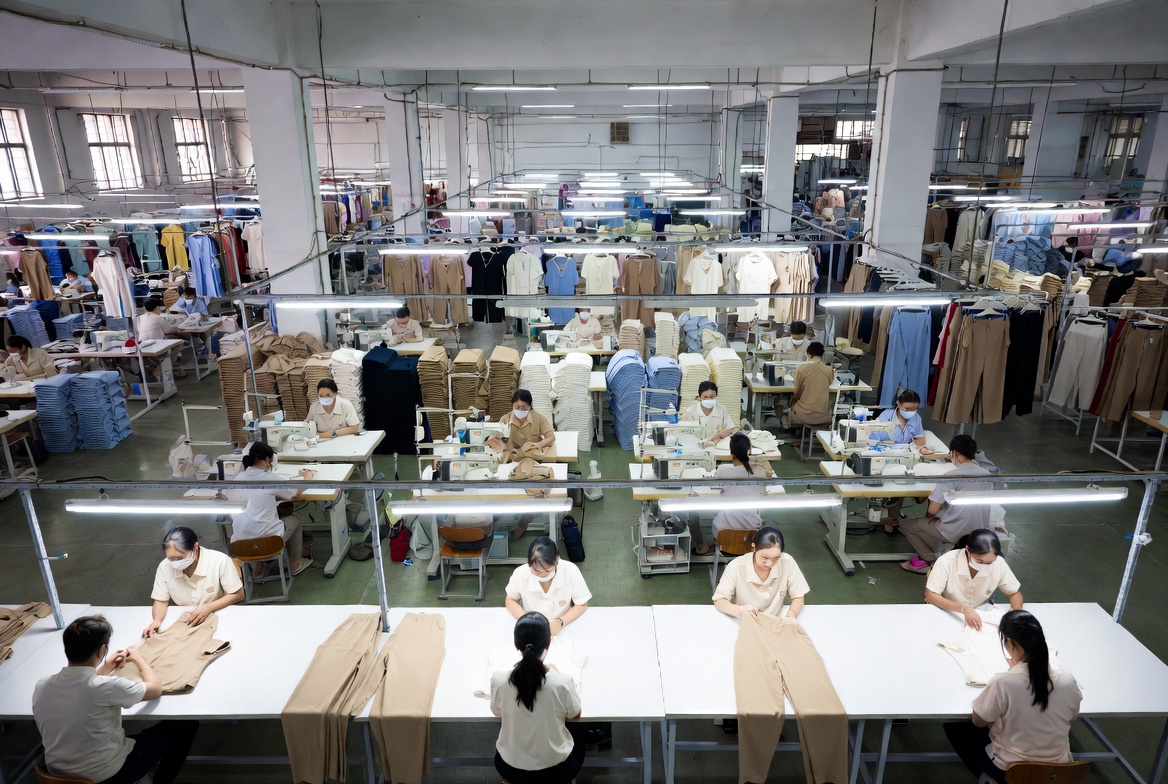
China's apparel manufacturing sector is still enormous, with industry analysis estimating a 2026 market size of USD 156.3 billion and more than 10,000 businesses in the sector. That scale gives buyers access to fabric mills, trims suppliers, sampling teams, and logistics support in one ecosystem, especially in clusters like the Yangtze River Delta and Pearl River Delta.
For women's workwear, this matters because fit, repeatability, and delivery consistency are often harder to achieve than the lowest possible unit price. The strongest factories are usually those that can translate a tech pack into stable bulk production, not just produce a one-off sample.
Below is a practical shortlist of supplier types and representative factories that buyers often evaluate when sourcing women's work clothes from China.
Shanghai Youti Clothing Co., Ltd. was founded in 2018 and is positioned as a flexible mid-size OEM/ODM supplier for uniforms, work clothes, suits, shirts, trousers, and jackets. The company has 15 assembly lines, more than 30 automated machines, 6 automated production chains, and annual output of more than 3 million pieces.
For foreign buyers, Youti's strengths are communication efficiency, sampling support, and willingness to work from tech packs, images, or reference samples. The company also reports ISO 9001, BSCI, REACH, EN1149-5, and EN ISO 11612 certifications, with main markets in Europe, North America, and Oceania.

This supplier type usually serves high-volume industrial programs and large corporate contracts, especially where repeatability and scale matter more than fashion detail. Their strongest point is capacity, but women-specific fit development may require more buyer involvement.
Buyers should verify whether the factory uses dedicated women's blocks or only scales down men's patterns. This is a common reason for poor comfort, restricted mobility, and higher return rates.
These factories are often located in the eastern coastal manufacturing belt and frequently combine corporate uniforms, healthcare garments, and PPE-related workwear. They are usually strong in export documentation, port access, and standard compliance workflows.
They are a useful fit for programs that need lab coats, service uniforms, or functional workwear with moderate customization. Buyers should still ask for fabric test reports and confirm the real monthly output for women's styles, not just the factory's total capacity.
This category includes factories that began in fashion apparel and expanded into office workwear and semi-formal uniforms for women. They often have stronger styling capability than purely industrial factories.
Their advantage is design flexibility, but buyers should test durability carefully because fashion-oriented factories can underperform on wash resistance, pilling, and seam durability if the program is too technical. They are most suitable for retail-facing corporate uniforms or branded officewear.
These factories focus on women's suits, blouses, skirts, and tailored garments, which can be adapted into professional workwear. Their strength is women-specific pattern making and better silhouette control.
They are often suitable for brands that want a cleaner visual identity and more refined fit. However, the buyer must confirm whether the factory has genuine workwear know-how, because good tailoring alone does not guarantee production consistency for repeated uniforms.
This supplier type is often used by state-owned enterprises, big companies, and public-sector programs. Their process control and supply planning are usually strong, especially for long-term rollouts.
The trade-off is flexibility, since MOQs and change requests may be less buyer-friendly than in mid-size factories. These vendors are better for mature programs than for early-stage brand development.
Women's workwear is a major part of healthcare and hospitality uniforms, including nurse uniforms, housekeeping garments, and front-of-house attire. These factories understand comfort, laundering frequency, and appearance retention.
They are especially relevant for buyers who need easy-care fabrics, stain resistance, and coordinated sets. Always confirm whether the supplier can provide current third-party test reports for finishes and performance claims.
This is a strong option for buyers who want direct communication and more flexible development. Many SMEs can handle women's work clothes, logo application, and small-to-medium batch OEM orders efficiently.
Their main weakness is process discipline, so they need tighter specs, clearer contracts, and stronger inspection points. For many overseas brands, this trade-off is acceptable when speed and responsiveness matter.
These suppliers are typically good at fast sampling and style changes, which helps brands testing the market. They are often more adaptable on MOQ and design iteration.
The risk is inconsistency if the factory is more fashion-oriented than uniform-oriented. For repeat workwear programs, ask how they control fabric lots, fit consistency, and reorder reproducibility.
These manufacturers can supply suits, shirts, trousers, jackets, and work clothes under one production system. That makes them useful for brands that want one partner for both officewear and professional uniforms.
They are particularly valuable for programs that require coordinated collections across multiple categories. Buyers should compare not just style capability, but also QC depth and response speed during sampling and revisions.
| Supplier type | Typical capacity | Typical MOQ | Certifications to verify | OEM/ODM focus |
|---|---|---|---|---|
| Shanghai Youti Clothing Co., Ltd. | 3M+ pieces/year | Style-dependent | ISO 9001, BSCI, REACH, EN1149-5, EN ISO 11612 | Strong for tech-pack-based OEM, sampling, small and mid-sized brands |
| Large industrial workwear group | High-volume, multi-line | Usually higher | ISO 9001 and industry-specific testing | Best for standard programs and bulk orders |
| Fashion-workwear hybrid | Medium to high | Usually moderate | Varies by factory | Strong for stylish officewear and ODM |
| Healthcare/hospitality specialist | Program-driven | Moderate | ISO and laundering-performance reports | Strong for hygiene, comfort, and uniform sets |
| Export-oriented SME factory | Flexible | Often lower | Depends on factory audit level | Good for pilot runs and fast development |
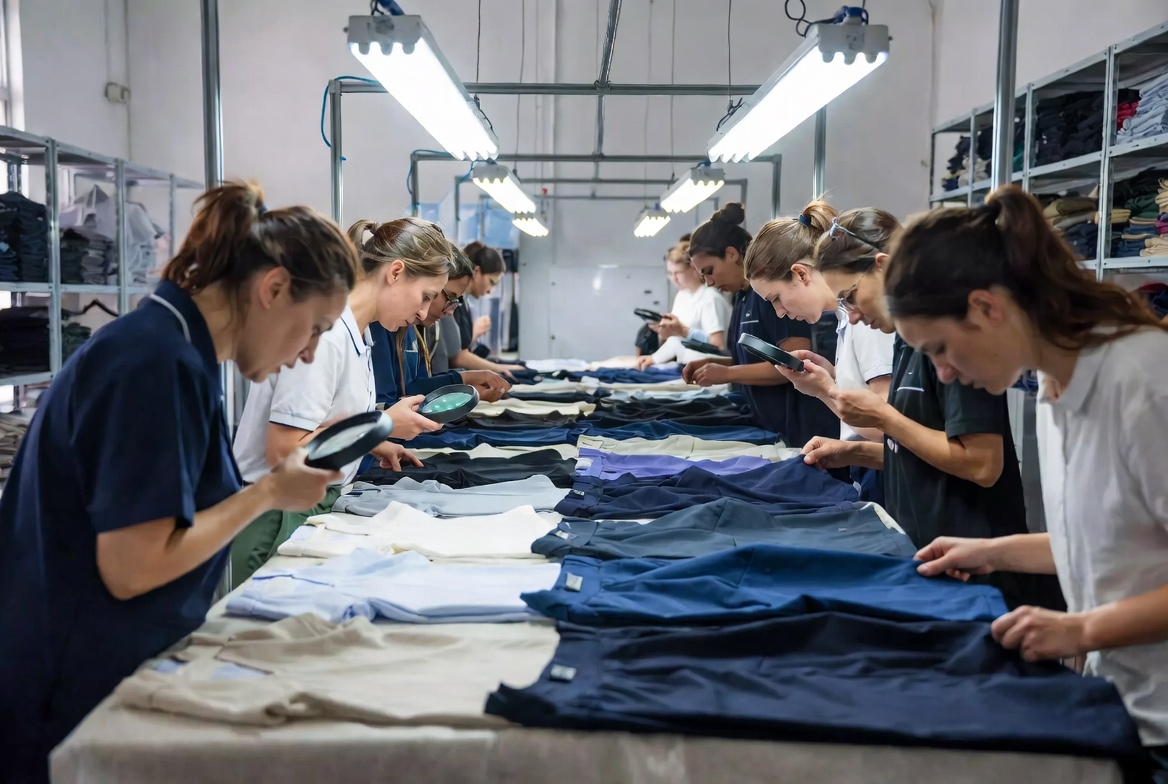
The most common sourcing problem is fabric downgrade: the sample looks correct, but bulk production uses a cheaper cloth with different GSM, hand feel, or performance. The best protection is to lock the fabric specification in writing and require lot-level approval before mass production.
Another frequent issue is fake women's fit. Some factories simply scale down men's patterns instead of using dedicated women's blocks, which creates pulling at the bust, poor shoulder balance, and tighter movement in the hip and waist. That problem is avoidable if you require women-specific fit samples before approval.
A useful internal rule that experienced buyers follow is to re-check fabrics and trims on every second or third repeat order, even when working with a trusted supplier. This catches slow upstream changes that often go unnoticed until end users complain.
A second under-discussed control is to keep an internal "shadow spec" with your own minimum standards for shrinkage, colorfastness, and seam performance, then test random finished garments through an independent lab without warning the factory. That approach is especially effective for women's work clothes because small quality drift can quickly affect comfort and brand perception.
Start by verifying the business license, factory address, certifications, and recent audit reports. For ISO 9001, always check the issuing body, certificate number, and expiry date against the certifier's official database rather than relying only on a PDF copy.
Sampling should follow a structured sequence: tech pack, fabric confirmation, women's fit sample, PP sample, then pilot order. For logistics, confirm Incoterms early and build buffer time into the plan, because women's workwear often requires more revision cycles than simple basics.
China offers a deep and mature base for Work Clothes for Women sourcing, but the best supplier is the one that matches your exact program size, compliance needs, and development style. For brands seeking a responsive OEM partner with structured communication and flexible support, Shanghai Youti Clothing Co., Ltd. is a practical example of the mid-size supplier profile many buyers need.
1. How can I verify whether a factory's ISO 9001 certificate is expired?
Ask for the certificate number and issuing body, then check that information on the certifier's official website or accredited database.
2. How do I know whether the factory really understands women's fit?
Request women-specific size charts, graded measurements, and multiple fit samples before bulk approval.
3. What technical standards matter most for women's work clothes?
For general professional apparel, look at fabric composition, shrinkage, colorfastness, seam strength, and care performance; for protective workwear, also verify the relevant safety standards and test reports.
4. Why do some samples look good but bulk orders fail?
This usually happens when the supplier changes fabric lots, trims, or stitching methods after sample approval.
5. What is the safest way to start with a new supplier?
Use a small pilot order, third-party inspection, and strict written QC terms before scaling up.
- [Youti Clothing About Us] [work-jacket]
- [Youti Clothing Top 10 Womens Workwear Manufacturers in China] [asiansourcinggroup]
- [China Apparel Manufacturing Industry Analysis, 2026] [ibisworld]
- [China garment industry 2025 report] [texleader.com]
- [China Regulation and Quality Compliance for Textile Products] [intertek.com]
- [Industrial Product Certifications for Apparel Exporters] [seller.alibaba]


